Virtual Assistant vs. AI Personal Assistant: Which Is Right for Me?
If you're looking for help with your workload, you may be deciding between a human virtual assistant and an AI personal assistant.
Both can save time, but they are not interchangeable.
A human virtual assistant can understand context, communicate with people, make judgment calls within agreed boundaries, and adapt to unusual situations.
An AI personal assistant can handle many digital tasks quickly, consistently, and at scale.
The right choice depends on the type of work you need done.
What Is a Virtual Assistant?
A virtual assistant (VA) is a human professional who provides administrative, operational, or specialized support remotely.
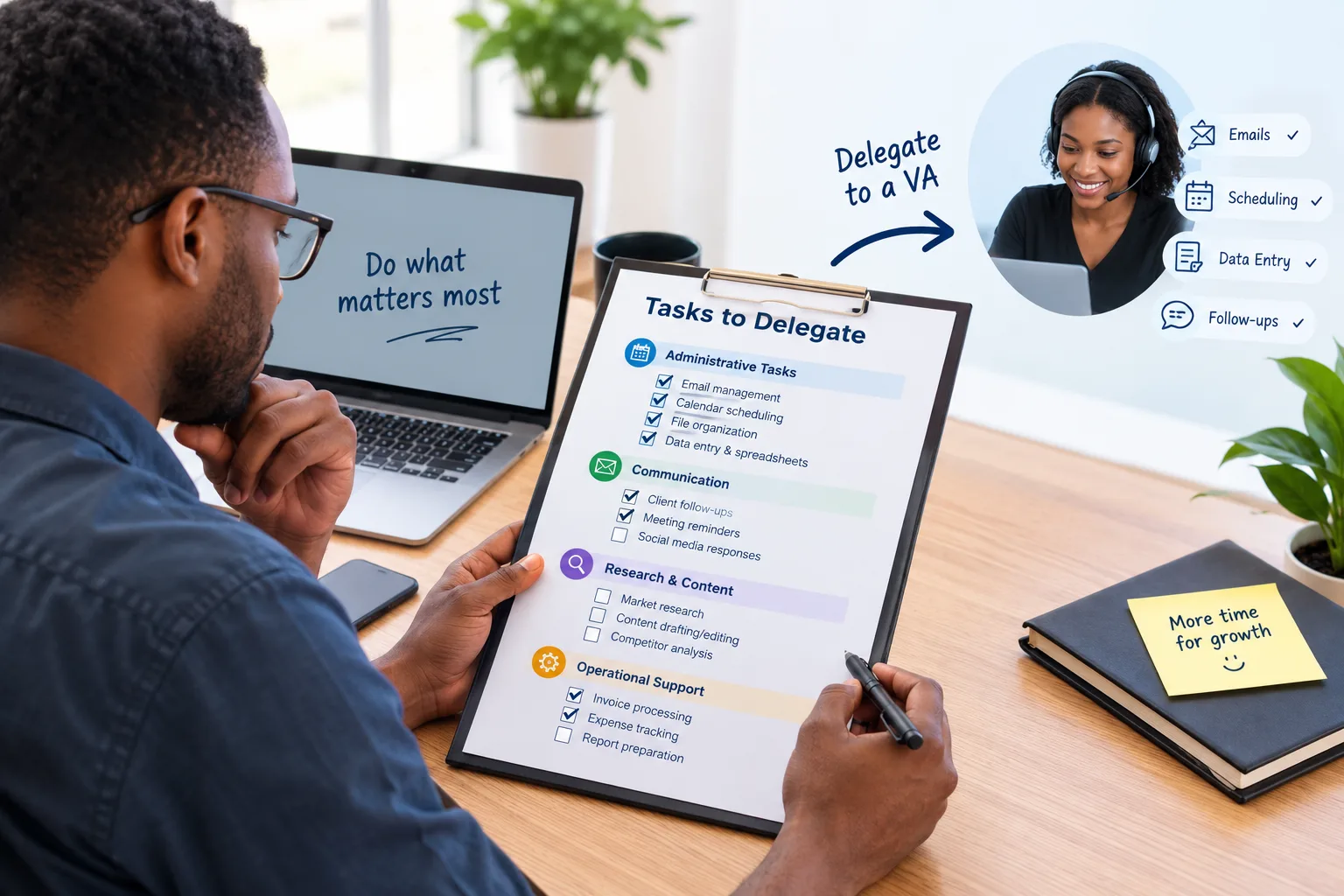
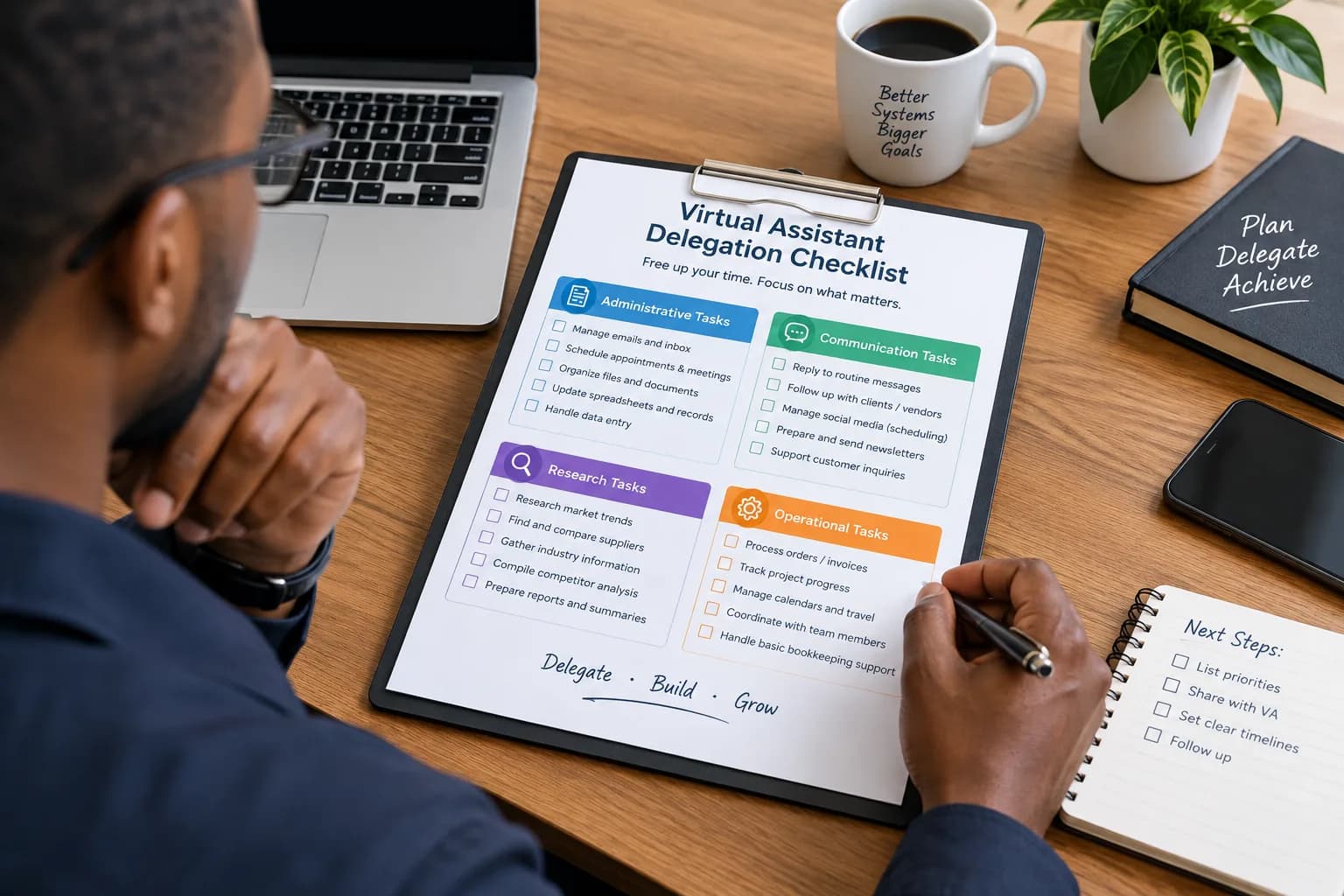
Depending on the role, a virtual assistant may handle:
- Email management
- Calendar scheduling
- Customer follow-ups
- Research
- Data entry
- Document preparation
- Travel planning
- Administrative coordination
- Social media administration
- Project support
Because a virtual assistant is a person, they can ask questions, understand context, and respond to situations that don't fit a predefined process.
What Is an AI Personal Assistant?
An AI personal assistant is software designed to help with tasks such as organizing information, drafting content, answering questions, summarizing material, or assisting with digital workflows.
Depending on the system and available integrations, an AI assistant may help with:
- Drafting emails
- Summarizing documents
- Creating lists
- Organizing information
- Generating meeting notes
- Preparing first drafts
- Answering routine questions
- Processing large amounts of text
- Supporting repetitive digital workflows
Note: The exact capabilities vary considerably between AI tools.
Where a Human Virtual Assistant Has an Advantage
Human support becomes particularly valuable when a task requires judgment, communication, or relationship management.
1. Handling Unusual Situations
A customer may send a message that doesn't fit your normal response template.
A human assistant can:
- Investigate the situation
- Consider the customer's history
- Understand the context
- Ask you for guidance when necessary
- Adapt the response accordingly
2. Managing Relationships
Some communication requires tact, context, and an understanding of the relationship involved.
A human assistant can recognize:
- When a message needs a different tone
- When an issue should be escalated
- When additional context is needed
- When a customer or client requires personal attention
3. Coordinating Multiple People
Scheduling a meeting is simple when everyone follows the same rules.
It becomes more complicated when people have:
- Conflicting availability
- Changing priorities
- Travel arrangements
- Special requirements
- Last-minute changes
A human can generally manage these exceptions more naturally.
Where an AI Personal Assistant May Have an Advantage
AI-based tools can be useful when you need speed, consistency, and the ability to process large amounts of digital information.
For example, an AI assistant can help you:
- Draft a first response
- Summarize a long email thread
- Extract information from documents
- Turn notes into a structured list
- Create a first draft of a report
- Process repetitive text-based information
These tasks can often be completed quickly without requiring another person to be available.
Human Judgment vs. Automation
The biggest difference is not simply speed.
It is judgment.
Consider these two requests:
Example 1 — Structured Task
"Move these five appointments to next week."
This may be suitable for a digital workflow if the rules are clear.
Example 2 — Context-Heavy Task
"A long-term client is unhappy about a recent issue. Please work out what happened and respond appropriately."
This situation may require:
- Context
- Discretion
- Relationship management
- Investigation
- Judgment
- Appropriate escalation
A human assistant may be better positioned to handle this type of situation.
Cost Considerations
The cost comparison isn't simply a matter of comparing a human assistant's hourly rate with the price of an AI tool.
Human Virtual Assistant Costs
Consider:
- Hourly or monthly support
- Training
- Management
- Communication
- Software access
- Review and quality control
AI Personal Assistant Costs
Consider:
- Subscription
- Additional software
- Integrations
- Setup
- Maintenance
- Human review
- Error correction
A cheaper tool may still require significant human supervision.
Likewise, a human assistant may cost more but take ownership of a broader workflow.
Practical Comparison
| Factor | Human Virtual Assistant | AI Personal Assistant |
|---|---|---|
| Speed | High | Very high for suitable tasks |
| Human judgment | High | Limited |
| Routine digital work | Good | Very good |
| Complex communication | Strong | Depends on system |
| Handling exceptions | Strong | Variable |
| Relationship management | Strong | Limited |
| Scalability | Depends on available staff | High for digital tasks |
| Training | Human onboarding required | Configuration/instruction required |
| Availability | Based on agreed schedule | Often available on demand |
| Best suited to | Context-heavy work | Repeatable digital work |
Neither option is automatically appropriate for every business.
What If You Use Both?
For many workflows, the two approaches can complement each other.
For example:
AI Assistant
     ↓
Summarizes incoming enquiries
     ↓
Organizes information into categories
     ↓
Human Virtual Assistant
     ↓
Reviews the information
     ↓
Handles communication and follow-up
     ↓
Important or unusual cases
     ↓
Escalated to you
This approach separates repetitive processing from work that requires human judgment.
Example Workflow
- AI receives and processes incoming enquiries.
- AI summarizes the key information.
- AI categorizes the enquiries.
- A human assistant reviews the results.
- The human assistant communicates with customers.
- Unusual or high-value cases are escalated to you.
This can allow each approach to focus on the type of work it is better suited to handling.
Which One Should You Choose?
Consider a human virtual assistant when you need someone to:
- Own a process
- Communicate with people
- Manage exceptions
- Coordinate multiple parties
- Make routine judgment calls
- Maintain relationships
Consider an AI personal assistant when you primarily need help with:
- Digital information
- Drafting
- Summarizing
- Organization
- Data processing
- Repetitive tasks
- Structured workflows
Consider using both when your workload contains a mixture of predictable processes and human decisions.
The Key Question
The most useful question isn't:
"Which technology is better?"
Instead, ask:
"Which parts of my workload require a person, and which parts can be handled reliably by software?"
Once you answer that question, the choice becomes much clearer.